Uncategorized

A ‘Smart’ Golf Ball to Track My Shots? Tell Me More!

A ‘Smart’ Golf Ball to Track My Shots? Tell Me More! 960 540 perri-wpguy-chipd

The ad copy caught my eye: YES, IT WORKS! TEE OFF WITH PRAZZA AND WALK STRAIGHT TO YOUR BALL EVERY TIME!

The message touched a nerve. I was only a few days removed from a round at Clover Hills Country Club, where I had donated two sleeves to the tree-and-rough gods.

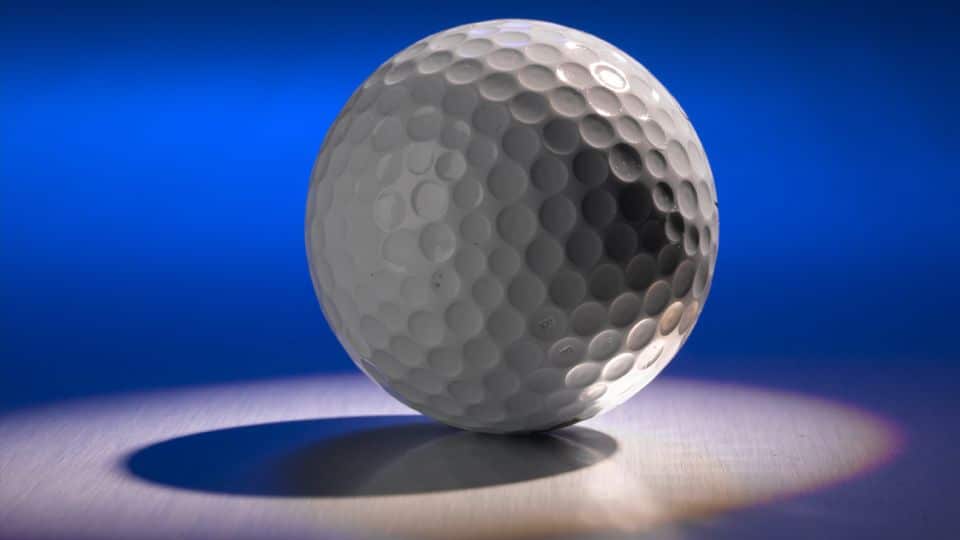
“Losing your ball is an unwanted hassle,” the ad continued. “On average, most golfers lose four balls per round, adding a total of 20 minutes of play just searching for their ball.” To combat this injustice and to keep play moving, the good folks at Prazza—a Dutch company with roots in the lucrative field of commercial-vehicle tracking—devised a ball containing a miniature radio transmitter that sends a beeping sound to your handset.

“Effective within 100m, your Prazza Golf Ball Finder will find your high performance Prazza ball every time,” the ad concludes. “Save time, save shots, save money—and play golf with a smile!” I was already smiling, but I wasn’t quite ready to fork over $399 for the Prazza handset or $30 for a sleeve of balls. And why a sleeve? Shouldn’t one ball be enough?

Then I saw a Christmas ad for the Wilson X Connected basketball. “If they’ve got any kind of game—and an iPhone—they’ll want this ball,” the ad boasted. “The world’s first attachment-free smart basketball tracks makes, misses and shot range when paired with the app via Bluetooth and any regulation 10-foot hoop.” I don’t lose many basketballs, so I was able to resist Wilson’s pitch. But the notion that we’re about to enter an era of “smart ball” technology is now firmly embedded in my dual-core, soft-center cranium.

Did I mention Topgolf? The driving-range chain recently opened one of its triple-decker playpens near my Kansas City home. “Sprawling entertainment venue with a high-tech driving range & swanky lounge with drinks & games!” the website proclaimed. I’m a recovering range rat, so the promise of lofty tech was like catnip, if I can mix small-mammal metaphors. I celebrated the New Year on the third tier of the Overland Park Topgolf, smacking smart balls down to flying-saucer-shaped targets. Upon landing, the balls somehow communicated with a computer in my stall, posting scores on a high-def screen—or, in “practice mode,” the distance each ball had traveled.

Topgolf’s yardage data satisfied my long-held yearning for real-time analytics regarding full-iron shots versus knockdown shots with a less-lofted club. (I found it to be a one-club differential with my wedges, two clubs with the longer irons.) Topgolf’s pepperoni-and-sausage flatbread satisfied my yearning for lunch.

To satisfy my curiosity, I called Andrew Macaulay, chief technology officer for Dallas-based Topgolf International. He confirmed that Topgolf’s range ball contains a passive radio-frequency identification chip (RFID) about a centimeter wide, borrowing technology used in everything from retail-store anti-theft tags to livestock identification. “Otherwise,” Macaulay said, “it’s a perfectly regular single-core golf ball.”

Only smarter. When you wave your clubhead over an electric eye in the ball dispenser, a Topgolf orb rolls past an antenna that activates the chip and tags it to the player. The system then waits for the ball to show up on the target field, which employs roughly 500 netted target segments and an end-of-the-range trench. A net collects the ball and funnels it to a box, where it passes another antenna, which reads the ID and signals the computer in the bay. “All the smarts really happen in the bay computer,” Macaulay said. “It figures out the yardage or the score for the game you’re playing.” Asked if the chips were durable enough to withstand the pummeling of a tour pro, Macaulay said that the manufacturer, Callaway Golf, had fired balls out of a cannon into steel plates without consequence: “The cover is going to degrade before the chip stops functioning.”

I had to remind myself that we were talking about a range ball. To be genuinely smart, a smart ball has to get past the equipment sniffers at the United States Golf Association. Which, it turns out, may not be as difficult as it sounds. “It’s been done,” said Dick Rugge, who retired in 2013 after 13 years as the USGA’s senior technical director. “There was a finder ball a dozen or so years ago that was conforming.”

The RadarGolf ball, as it was called, had a cool, hunting-dog-at-point logo, which made it a collectible in addition to being … uh, collectible. An embedded chip reflected signals sent from a hand-held device, assisting visually impaired golfers; but due to its limited detection range (and high price) it never caught on with sighted ball buyers. The more findable Prazza ball, endorsed by the United States Blind Golf Association, aimed for a broader market. “It saves time, saves strokes and saves people money on golf balls,” said Michael Lynch, president of IntheHoleGolf.com, Prazza’s North American distributor. Asked how long until we have chips small enough to embed in a ball, Lynch said, “Five years, maybe? That’s the technology that will blow everybody’s socks off. With a GPS chip, you could play at night without a glow ball!”

Sharing his excitement, I said, “Or find your ball under a pile of leaves in the rough!”

Lynch reined me in by pointing out that Prazza had tried to license its technology to the major ball makers and had subsequently quit the business. Chuckling, he added, “The ball companies don’t really want you to find their golf ball.”

I chuckled back, recalling a British film, The Man in the White Suit, about a garment-industry chemist who invents a fabric that never wears out. Hilarity ensues.

The truth is, I don’t dream of a ball that’s merely smart enough to say, “Here I am!” I want a ball that captures launch angle, initial velocity, backspin, sidespin and smash factor, along with all pertinent environmental data, including air temperature, wind velocity and proximity to the beverage cart. “It’s all good,” Rugge said of my hypothetical genius ball, “as long as you can’t access the information while you’re playing the round.” Thud. “That would be like getting advice from a third party.”

John Spitzer, the USGA’s current equipment czar, was equally deflating. “We have a decision that says you’re allowed to have a chip in the ball,” he said, “but the use of a device to find it would be in violation according to Rule 14-3.” I blinked repeatedly, trying to absorb this information. “We allow the device to collect data,” he said patiently. “It’s the access to the data during the round that’s forbidden.”

I could imagine the ad copy: THE FOREVER BALL! LOSE IT IN THE WOODS AND RECOVER IT … IF YOU FEEL LIKE GOING BACK!

Spitzer must have sensed my dismay. “Just because it’s not currently allowed doesn’t mean it won’t be in the future,” he said. “Everything’s happening incredibly fast.”

So that’s how it stands. The smart ball is on the horizon, but for now it’s something you enjoy with wings and mushi at Topgolf.

And chips. Don’t forget the chips.

Original article published on Golf.com

How the Internet of Things is Poised to Shake Up Sports Marketing

How the Internet of Things is Poised to Shake Up Sports Marketing 640 486 perri-wpguy-chipd

Connected devices — or as the cool kids are referring to them, Internet of Things (IoT) — are showing up everywhere in sports, from NFL broadcasts to your co-worker’s Fitbit, and they’re changing the way the entire sports vertical is marketed. This means big changes in how sports brands sell to consumers.

That even goes for sports businesses that aren’t manufacturing connected devices like clothing or equipment with a sensor in it. If you operate a small driving range, a chain of fitness centers or a major league sports arena, you need to keep in mind that your customers are using IoT products or are connecting with professionals who do use them.

Whether you are an agent, a manufacturer, a retailer, or a landlord, if your business crosses paths with athletes or fans, that means your customers are changing, and your marketing will need to change to reach and engage them.

Athletes and fans are hungry for data now that sensors that measure speed, acceleration, direction, balance, distance, altitude, weather and stress levels have become small and inexpensive enough to embed in an athlete’s shoes, golf clubs, and undershirt.

It’s creating a brand new experience for sports fans – one focused on social connectivity and gamification.

For example, during the 2014 season, the NFL partnered with Zebra Technologies to tag players with its wearable sensors during games to supply coaches with real-time information and create a brand new experience for data-hungry sports fans. Imagine if instead of just seeing how many catches a receiver made, we could actually see their body temperature or track their exhaustion rate.

Connected devices are also breathing excitement back into the world of personal fitness, as successful brands straddle the line between manufacturers of sports equipment and personal trainers, motivators and educators. It’s no longer enough just to sell shoes, a treadmill or a pass to the gym. To thrive, a brand has to become the runner’s personal coach.

Devices like the Fitbit offer consumers ways to challenge themselves to walk a certain number of steps or burn a certain number of calories. Meet your goals? Get a pat on the back. Slacking off? Your Fitbit will remind you to get up and move. That kind of personalized, connected motivation is incredibly powerful – and it’s why Fitbit, Inc enjoys enough success to consider seeking an IPO this year.

Consumers are expecting more out of their equipment. They don’t want to buy a weight bench that relies on their own willpower to use. They want a weight bench that doubles as a coach to celebrate their personal bests, share their successes on social media, and reminds them to stick to a fitness routine.

Next comes the personal touch. Companies like FitOrbit, Fitmo and GOQii are creating new value by combining the wearable tech with personal trainers. This is opening up an entirely new ecosystem of “remote professionals” who can help coach and make people better.

This kind of support has a two-sided advantage — creating a new market and building commitment to the original product. The great thing about coaching is that it’s supposed to be repetitive. It’s an open invitation to communicate your message and influence the customer behavior so that using the product becomes a habit.

Gone are the days when brands could just tout the health benefits of their product and expect customers to buy. Now they need to bundle those products with tools to help their customers get beyond willpower. How? By providing educational and motivational materials in their content channels and by making fitness more fun, gamifying goals and connecting users into communities who have each others’ backs.

Consumers are hungry for simplicity

One of the biggest challenges marketers face is turning the tide of consumer behavior and convincing people to try something new. That problem is can be minimized with IoT devices, which connect easily to the user’s phone then can melt seamlessly into the background.

But IoT tech can also be poorly designed so that the device requires too much care and feeding. If a device or app doesn’t make consumers lives easier, they’ll walk on by.

Customers love devices like the Fitbit, Jawbone Up, or Basis heart rate and sleep monitor, because they can turn on their device and then just forget about it. It doesn’t become yet another thing you have to do in your already busy day. Instead of having to keep track of how far you’ve walked, an armband does that for you. Instead of setting an alarm to remind you to get up and go for a walk, your wristwatch buzzes because you haven’t been active in a while. Instead of guessing at your optimal heart rate, sensors in your clothes take your age, weight and body mass index into account and notify you if you’re overdoing it.

IoT technology is even transforming one of the oldest games around: golf. For some players, golf is essentially a contest against themselves and their past performance. For other players, it can be one of the most social sports. But in any case, the industry is challenged to maintain its popularity, because it is time intensive and it’s getting harder to get friends together for a round. One of our clients, Arccos, is addressing golfers’ desire for self-improvement with a set of connected golf club sensors paired to a mobile app, letting consumers track distances for each club.

To me, that’s one of the most exciting things about connected technology: the freedom to just have a phone in your pocket and play the game you love.

Forget about gimmicks

It’s important for brands to keep in mind that just because a product is connected to the internet doesn’t make it useful. “Hey, let’s do this. It’ll be cool!” has never been a great way to develop products.

Whether you’re connecting a snowboard boot or a pair of sunglasses you have to understand why. Does your device add value, entertainment or utility? Or are you providing a solution to a problem no one has?

Because in the end, no matter how big a role technology plays in the industry, sports is still a people business. It’s crucial that marketers and agencies keep sight of how the technology helps brands further engage with people.

Source: SocialTimes

Golf’s Future

Golf’s Future 1253 705 perri-wpguy-chipd
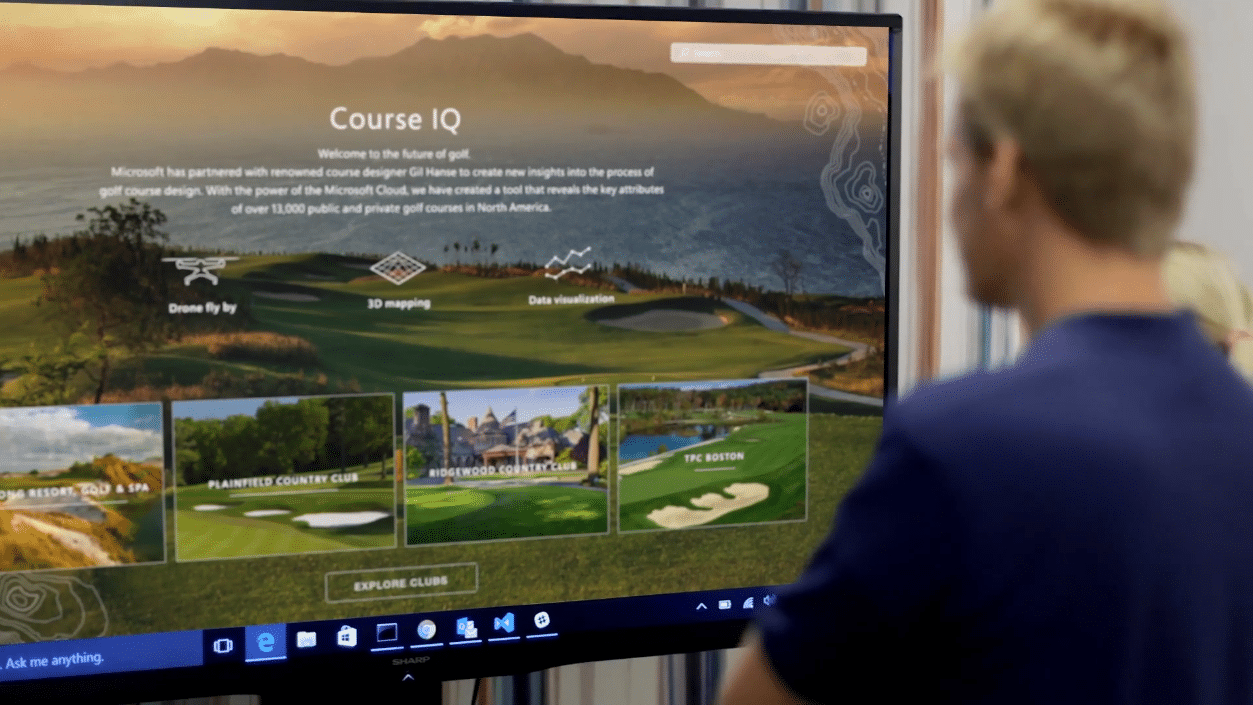
Below is a snippet from a recent article published by the Wall Street Journal (WSJ) which discusses how the Microsoft Cloud is using data to help golf course architect Gil Hanse. See the full article here.
The creation of actionable data is a process. First, it must be gathered. Then it has to be organized and understood, separating the necessary from the noise. Only then it can be effectively deployed in search of better outcomes.

More and more, golf finds itself at the deployment stage. Whether using data for predictive or performance purposes, leaders are applying the fruits of data to evolve the sport, challenging long held notions of how people engage with it.

What if new players, through data-rich tools and cloud-connected instruction, could learn the game in half the time? What if golfers played data-informed courses delivering a superior experience in three hours instead of five? Why can’t virtual reality allow golfers in Minnesota to play 12 months a year, or let enthusiasts design courses in the cloud for others to play?

Each idea builds on the next, leveraging the power and flexibility of the cloud to give them life.

The benefits transcend golf. Sports is a breeding ground for creative, data-intensive problem solving. Algorithms created to predict a pro’s next shot can have broader implications for manufacturing or logistics. “With sports you can get instant validation. We can solve a problem, explain how we solved it, and then relate it to you can how you can solve your own problems that have nothing to do with sports,” says Mike Downey, Principal Evangelist, Sports at Microsoft. “Here’s the impact it had on a massive audience of people.”

Golf on the front edge of innovation.

Not a bad outcome for those humble Scottish shepherds.

Golf Offers Insight to Wearable IoT Technology Trends

Golf Offers Insight to Wearable IoT Technology Trends 600 419 perri-wpguy-chipd

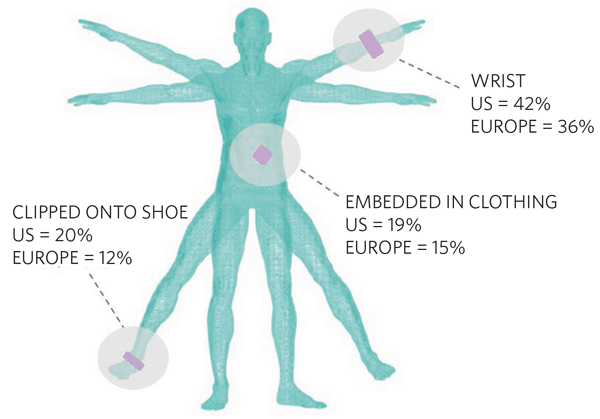
A recent survey by Forrester Research shows 36% of European consumers are interested in a wristband as a wearable sensor device.

Surprisingly, the game of golf provides a unique perspective of wearable IoT technology trends over the next 3-5 years.

There are about 80 million golfers worldwide, and so golf serves as a good case study for anticipating wearable tech trends because the market potential is large, the consumer base is global, and golfers are avid users of wristband wearable devices.

The game of golf demands analysis of many sensory inputs, making analog sensor integration an important trend for GPS golf watches. Sensors can provide a golfer with knowledge of environmental conditions and swing mechanics, leading to better golf scores.

Environmental conditions affect ball flight, shot accuracy, and distance control. Some relevant environmental parameters are ambient temperature, wind direction, wind speed, altitude, elevation, and distance.

Golf swing mechanics can be improved with metrics of swing tempo, timing, and power. Swing metrics are acquired by processing multiple degrees of freedom using MEMS inertial sensors. Moreover, sensors are useful for monitoring a golfer’s physical condition.

Golf is an outdoor sport played in moderately cold to hot weather conditions and a game that can be walked, making it a healthy activity. Walking an 18-hole round of golf is equivalent to a 3.5 mile run and burns up to 2,000 calories.

For the avid walker, strength and endurance are requisites to scoring well. Consequently, sensory information of the body’s exposure to the elements and physiological condition are important wearable features.

Some useful physiological parameters are heart rate, body temperature, and hydration level. A continuous heart rate monitor, based on photoplethysmography using reflectance mode optical sensors, can alert a golfer to fatigue or overexertion.

Armed with insight to key attributes of the game, the major trends in GPS sports watch technology can be anticipated:

  • Physiological sensor array integration
  • Environmental sensor array integration
  • Power management integration
  • Cloud connectivity integration

The trend of dense sensor integration in sport wearables will require analog semiconductor solutions that faithfully capture and interpret real world analog signals such as temperature, light, heart rate, motion, and orientation.

Furthermore, consumers expect the longest possible operating time before battery charging. A GPS golf watch must operate at ultra-low power with accurate battery management to ensure continuous operation beyond 10 hours in activity-mode and 30 weeks in watch-mode.

As wearable devices trend toward more compact, lightweight, and comfortable form factors, they will need power efficient and highly integrated analog semiconductor solutions that occupy the smallest possible area.

Source: The original version of this article can be found on Electronics Weekly

The Internet of Things for sports is quickly taking shape

The Internet of Things for sports is quickly taking shape 150 150 perri-wpguy-chipd

The combo of sensors and sports attracts big money.

Jason Fass, the CEO of Zepp Labs, imagines a future for sports where sensors are everywhere: in balls, bats, footballs and in a player’s clothing. It’s hard not to get caught up in this vision.

A big part of sports is all about collecting and analyzing data — and sensors can give you more of that data to work with, much more. Improving your own game with 3-D visualizations of a golf swing is part of it, too.

“We believe that every ball, bat, racket, club, glove, helmet will be digitally connected,” said Fass. “We are building a company platform to enable those experiences and capture all that data.”

Zepp makes sensors for baseball, tennis and golf, and it now has more money to work with to develop more products. This week the Los Gatos, Calif.-based company, founded in 2012, announced that it had received $15 million in additional funding. That brings to $20 million the amount of money it received last year.

GGV Capital led the funding round with participation from Legend Capital, Bertelsmann and Cherubic Ventures.

Zepp sensors have two accelerometers, a gyroscope and an ARM processor. On a baseball bat, for instance, the sensor weighs 6 grams and attaches to the knob of the bat. The battery can provide five hours of continuous streaming in Bluetooth mode. Among the things the sensor measures are the bat swing speed, its angle on impact, and the amount of time the bat spends in the batting zone.

The sensors, which sell for $149 each, can produce similar types of metrics for golf and tennis. The data is collected using a mobile app.

Zepp is an Internet of Things company of a sort. It is building a connected universe of devices, but its products aren’t about controlling something in the same way that Nest, the thermostat maker acquired by Google, can control room temperature via an app.

In time, Fass believes that sports teams will have sensors in all their equipment. For instance, in football, coaches will be able to measure the acceleration of a wide receiver, or the arm speed and velocity of a quarterback. “That’s going to depend on technology companies like us making the product unobtrusive,” he said.

With those sensors will come a flood of data. In the last 30 days, Fass said its technology has been used by customers to collect data on 500,000 golf swings.

Zepp considers its core technology to be its software, which turns the sensor data into useful metrics. But this industry is also keenly interested in improvements in technologies such as battery power, as it aims to shrink the size of the sensors. The battery is about half the volume of the sensor device, and a little less than half its weight, said Fass.

The entire field of integrating sensor technology in sports is an emerging one, with new products gaining notice. At the recent Consumer Electronics Show in Las Vegas, one attention-getting arrival was a sensor-equipped $295 basketball by Infomotion Sports Technologies. The 94Fifty Smart Sensor Basketball provides data on shot arc, speed, dribble and other metrics.

Gartner estimates that the market for wearable electronic devices, along with apps and services for fitness and personal health, was worth about $1.6 billion worldwide last year. That’s expected to rise to $5 billion by 2016.

Source: The original version of this article can be found on ComputerWorld.com

How the Internet of Things is Turning Into the Internet of Sports

How the Internet of Things is Turning Into the Internet of Sports 1280 638 perri-wpguy-chipd

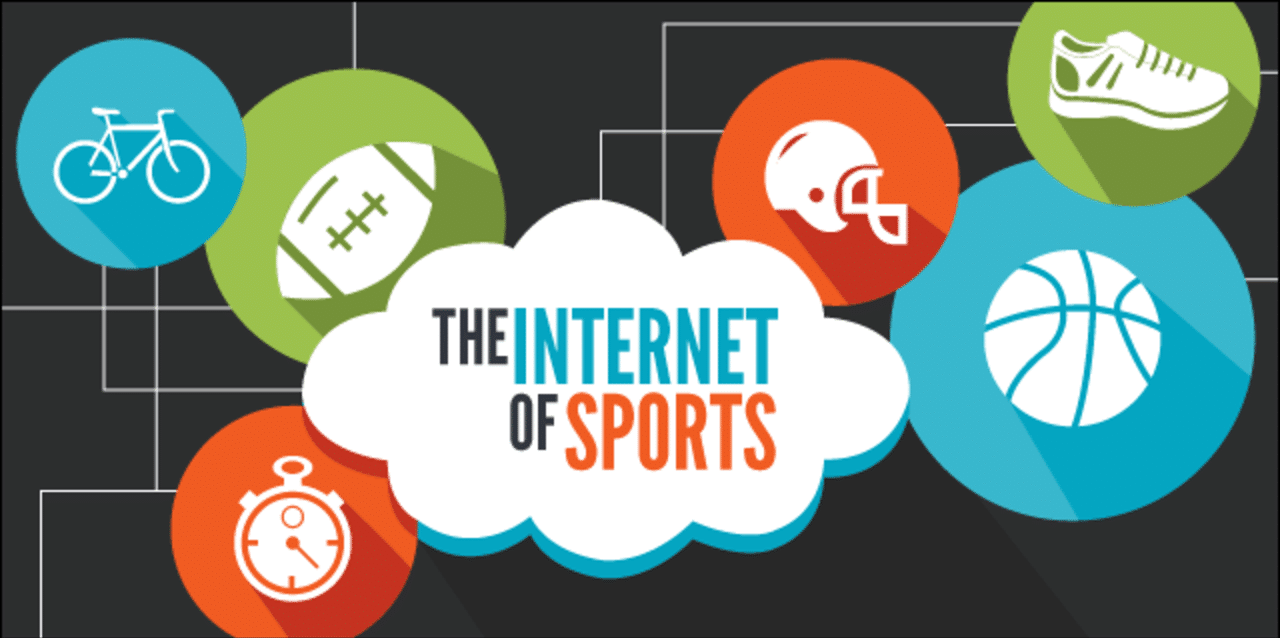
The Internet of Things (IoT) is a vast new frontier where companies are currently experimenting with fascinating new ideas and items. One of the major areas where we’ve seen intriguing innovations has been with consumer products, but other industries are poised to have revolutions of their very own. Though it may feel like a strange fit, the Internet of Things has tremendous potential when it comes to sports. From football to baseball and basketball to golf, the possibilities for how much the IoT can change sports are nearly endless. Most of these changes will likely be felt behind the scenes, but even then the impact can reach from the athletes all the way to the fans themselves. Indeed, as time goes on, the degree to which the Internet of Things is infiltrating sports may require its own branch titled the Internet of Sports.

The main technology fueling these innovations involving sports is similar to that which fuels the Internet of Things as a whole. Sensors that measure everything from temperature to altitude to stress levels have become much more common in our world, but in addition to that, they’re also becoming smaller and cheaper to manufacture. The technology to connect all these sensors and analyze the data they gather has also advanced. One area where the IoT is particularly noticeable is wearable technology. People are already using wearable tech to track their fitness routines, so it’s easy to see how this can be applied to sports. Sensors can be placed on players to help trainers track their movements and progress. Sensors may also become embedded within sports equipment, which can be used to gather data on performance. For example, some Internet of Things startups are placing sensors in items like baseball bats, golf clubs, tennis rackets, and basketballs. From there, data can be collected to determine–in the case of a baseball bat–how a player is swinging and if the athlete needs to be corrected in any particular way.

These ideas are already being put to use. Take the example of Major League Soccer’s Seattle Sounders. While sensors cannot be used during games, they’ve become an integral part of practice. Each player is outfitted with a vest with sensors that monitor the players’ fitness levels. The sensors generate data on two levels: the external load, which measures how much work the athlete is doing, and the internal load, which calculates how much work the body has to do to accomplish the external load. From there, team trainers and managers can tell how hard a player is working and detect instances where injury risk is greater. The team can then modify their training to reduce risk of injury and maximize training time without crossing certain thresholds.

The Internet of Things is also playing a role in football. The NFL season may already be underway, but in training camp, many NFL teams made use of sensors to gather data on player speed and calorie expenditure. While some of that data may be used to reduce the risk of injury, it can also be used to discover which players are working harder than others. A spot on the final roster may be up for grabs, and if data shows a player is slacking during practice, he may not see much playing time. All this data may also end up changing coaching strategies and player tendencies as more understanding of the game is gained.

While the Internet of Things can help athletes and teams, it may also improve the fan experience. This was put into practice at a recent LPGA tournament in Canada. The event was attended by about 1,500 fans who were given access to additional data, all in real time. Thanks to sensors on the golf course and advances in cloud computing, fans could be tracked and given information relative to where they were on the course. If fans were at the ninth hole, for instance, they could access information on their phones showing which players were also on that hole, their scores, and where they were on the leaderboard. Fans could also track the locations of their favorite players no matter where they were. Information on each hole (distance, par) could also be accessed.

The Internet of Things has many applications, not the least of which are in the sports world. New insights are set to be gained that can be used by players, coaches, and trainers. Major changes may be on the horizon, not only for improving sports but for how fans experience them as well. As the IoT expands its influence and advances its technology, the sports world will find more uses for it, and the results should be both helpful and exciting.

Source: Original article can be found on Tech.com

What is the Internet of Things (IoT)?

What is the Internet of Things (IoT)? 1920 1080 perri-wpguy-chipd

The “Internet of things” (IoT) is becoming an increasingly growing topic of conversation both in the workplace and outside of it. It’s a concept that not only has the potential to impact how we live but also how we work. But what exactly is the “Internet of things” and what impact is it going to have on you, if any? There are a lot of complexities around the “Internet of things” but I want to stick to the basics. Lots of technical and policy-related conversations are being had but many people are still just trying to grasp the foundation of what the heck these conversations are about.

Let’s start with understanding a few things.

Broadband Internet is become more widely available, the cost of connecting is decreasing, more devices are being created with Wi-Fi capabilities and sensors built into them, technology costs are going down, and smartphone penetration is sky-rocketing. All of these things are creating a “perfect storm” for the IoT.

So What Is The Internet Of Things?

Simply put, this is the concept of basically connecting any device with an on and off switch to the Internet (and/or to each other). This includes everything from cellphones, coffee makers, washing machines, headphones, lamps, wearable devices and almost anything else you can think of. This also applies to components of machines, for example a jet engine of an airplane or the drill of an oil rig. As I mentioned, if it has an on and off switch then chances are it can be a part of the IoT. The analyst firm says that by 2020 there will be over 26 billion connected devices… That’s a lot of connections (some even estimate this number to be much higher, over 100 billion). The IoT is a giant network of connected “things” (which also includes people). The relationship will be between people-people, people-things, and things-things.

How Does This Impact You?

The new rule for the future is going to be, “Anything that can be connected, will be connected.” But why on earth would you want so many connected devices talking to each other? There are many examples for what this might look like or what the potential value might be. Say for example you are on your way to a meeting; your car could have access to your calendar and already know the best route to take. If the traffic is heavy your car might send a text to the other party notifying them that you will be late. What if your alarm clock wakes up you at 6 a.m. and then notifies your coffee maker to start brewing coffee for you? What if your office equipment knew when it was running low on supplies and automatically re-ordered more? What if the wearable device you used in the workplace could tell you when and where you were most active and productive and shared that information with other devices that you used while working?

Recommended by Forbes
On a broader scale, the IoT can be applied to things like transportation networks: “smart cities” which can help us reduce waste and improve efficiency for things such as energy use; this helping us understand and improve how we work and live. Take a look at the visual below to see what something like that can look like.

The reality is that the IoT allows for virtually endless opportunities and connections to take place, many of which we can’t even think of or fully understand the impact of today. It’s not hard to see how and why the IoT is such a hot topic today; it certainly opens the door to a lot of opportunities but also to many challenges. Security is a big issue that is oftentimes brought up. With billions of devices being connected together, what can people do to make sure that their information stays secure? Will someone be able to hack into your toaster and thereby get access to your entire network? The IoT also opens up companies all over the world to more security threats. Then we have the issue of privacy and data sharing. This is a hot-button topic even today, so one can only imagine how the conversation and concerns will escalate when we are talking about many billions of devices being connected. Another issue that many companies specifically are going to be faced with is around the massive amounts of data that all of these devices are going to produce. Companies need to figure out a way to store, track, analyze and make sense of the vast amounts of data that will be generated.

So what now?

Conversations about the IoT are (and have been for several years) taking place all over the world as we seek to understand how this will impact our lives. We are also trying to understand what the many opportunities and challenges are going to be as more and more devices start to join the IoT. For now the best thing that we can do is educate ourselves about what the IoT is and the potential impacts that can be seen on how we work and live.

Source: The original version of this article can be found at InternetofGolf.com

Privacy Preferences

When you visit our website, it may store information through your browser from specific services, usually in the form of cookies. Here you can change your Privacy preferences. It is worth noting that blocking some types of cookies may impact your experience on our website and the services we are able to offer.

Click to enable/disable Google Analytics tracking code.
Click to enable/disable Google Fonts.
Click to enable/disable Google Maps.
Click to enable/disable video embeds.
Our website uses cookies, mainly from 3rd party services. Define your Privacy Preferences and/or agree to our use of cookies.